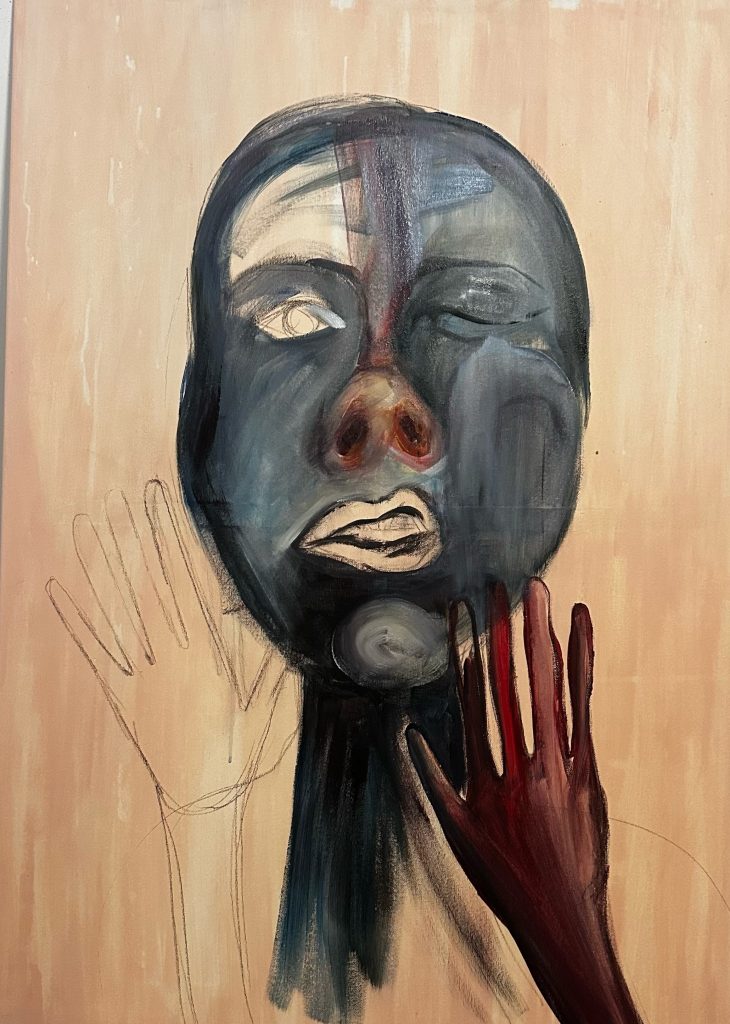
1. The First Emergence – The Underpainting
The painting began with a quiet, peach-rose background: soft, diluted, almost like skin breathing.
At this stage, nothing was defined — only the sense of something wanting to appear.
This gentle ground became the threshold for a deeper, darker presence to rise.
2. The First Face – The Archetype Takes Shape
Soon, the first form emerged: a distorted blue-grey face, pressed forward as if against an unseen surface.
The features were blocked in roughly — one eye open, one squeezed shut, the nose pushed upward, the mouth tense.
There was no intention of beauty yet. Only raw contact.
It felt like the psyche’s first push toward visibility.
3. The Hands Arrive – Contact, Pressure, Boundaries
Sketches of hands appeared on both sides of the face, almost instinctively.
They were thin, elongated, ghost-like outlines…
Hands wanting to touch, to push, to feel the barrier.
Hands signaling: “I am here. I want out.”
4. The Neck and Shadow Body – The Descent Begins
Dark blues, blacks, and violets began to pull downward, forming a shadow-body beneath the chin.
This stretch of darkness grounded the portrait but also elongated it, giving it a surreal, Francis Bacon-like tension.
It was no longer a face — it was a figure caught between worlds.
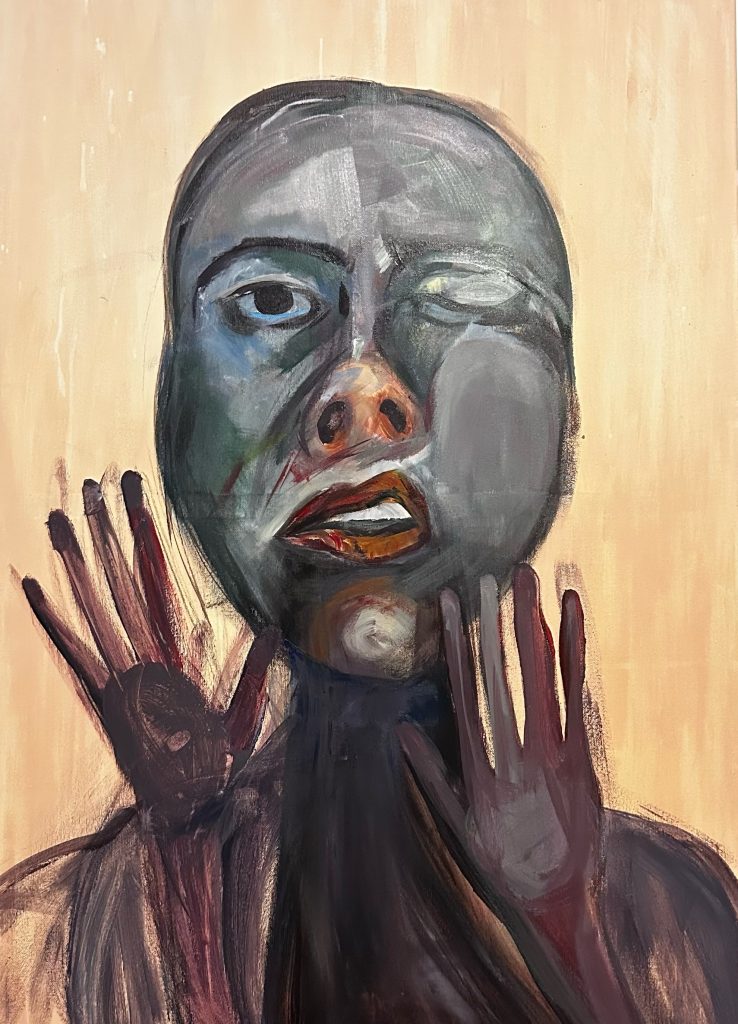
5. The First Refinements – Color, Tension, Emotion
The second phase of painting brought more intention.
The eyes deepened, one gaining clarity while the other remained closed, as if resisting vision.
The mouth developed tension, almost a silent scream.
Warm reds appeared inside the nostrils and lips — a pulse of life under the cool blue mask.
The hands darkened, gaining mass and emotional weight.
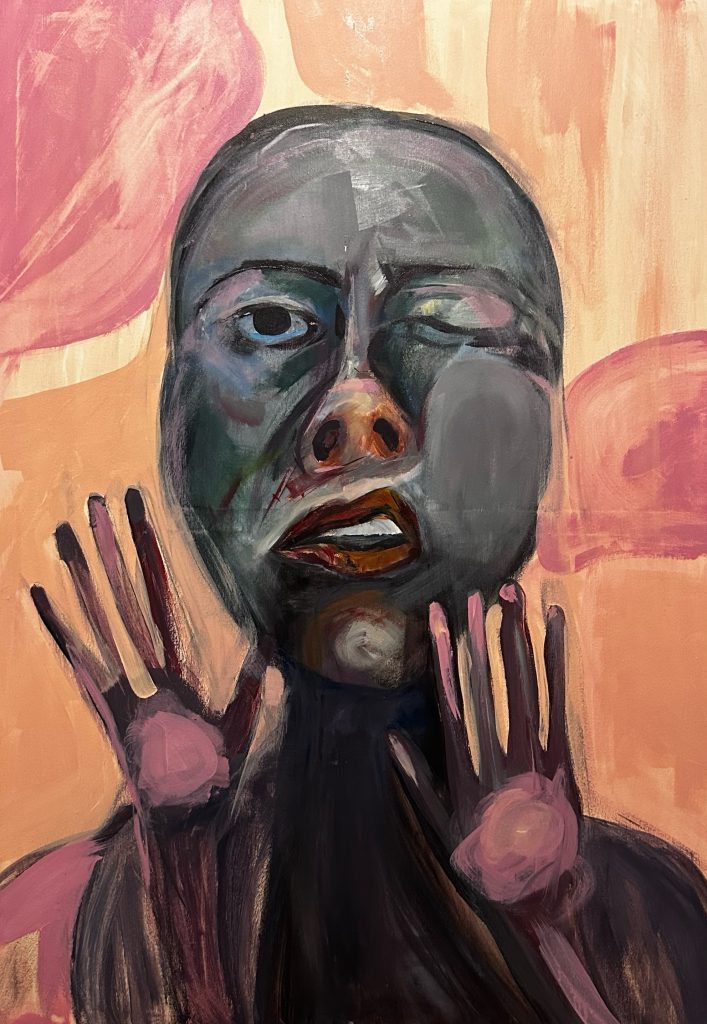
6. The Pink Interference – Pastel Softness Meets Brutal Form
Then came the unexpected: soft pink shapes brushing over the background.
Pastel, light, tender — a direct contrast to the heavy, distorted face.
This phase created a striking duality:
the brutal and the gentle,
the flesh and the dream,
the pressure and the release.
7. The Second Layer of Hands – Touch Becoming Visible
The hands became more defined — pinks, violets, and shadows merging.
Now they no longer felt like sketches.
They felt like forces, pressing, holding, containing.
The glass barrier became more believable through the tension of these palms.
8. Emotional Shift – From Fear to Emergence
By the third phase, subtle shifts changed the energy of the portrait:
– the eye softened
– the face became more expressive
– the colors began to breathe
– the tension turned into transformative pressure, not pain.
The painting now looked less like someone trapped —
and more like someone crossing through, breaking the invisible membrane of an old self.
Summary of the Journey
This work grew from a raw, instinctive impulse — a vision pressed into your psyche while you were in water.
Each stage carried a different emotional frequency:
– birth
– pressure
– shadow
– contact
– tension
– softening
– emergence
The result so far is a portrait that feels alive, breathing against the canvas, caught between dissolution and rebirth.
0 comments on “Process Notes – “Face Pressed Against Glas”